
For decades, health conversations have revolved around two pillars: nutrition and exercise.
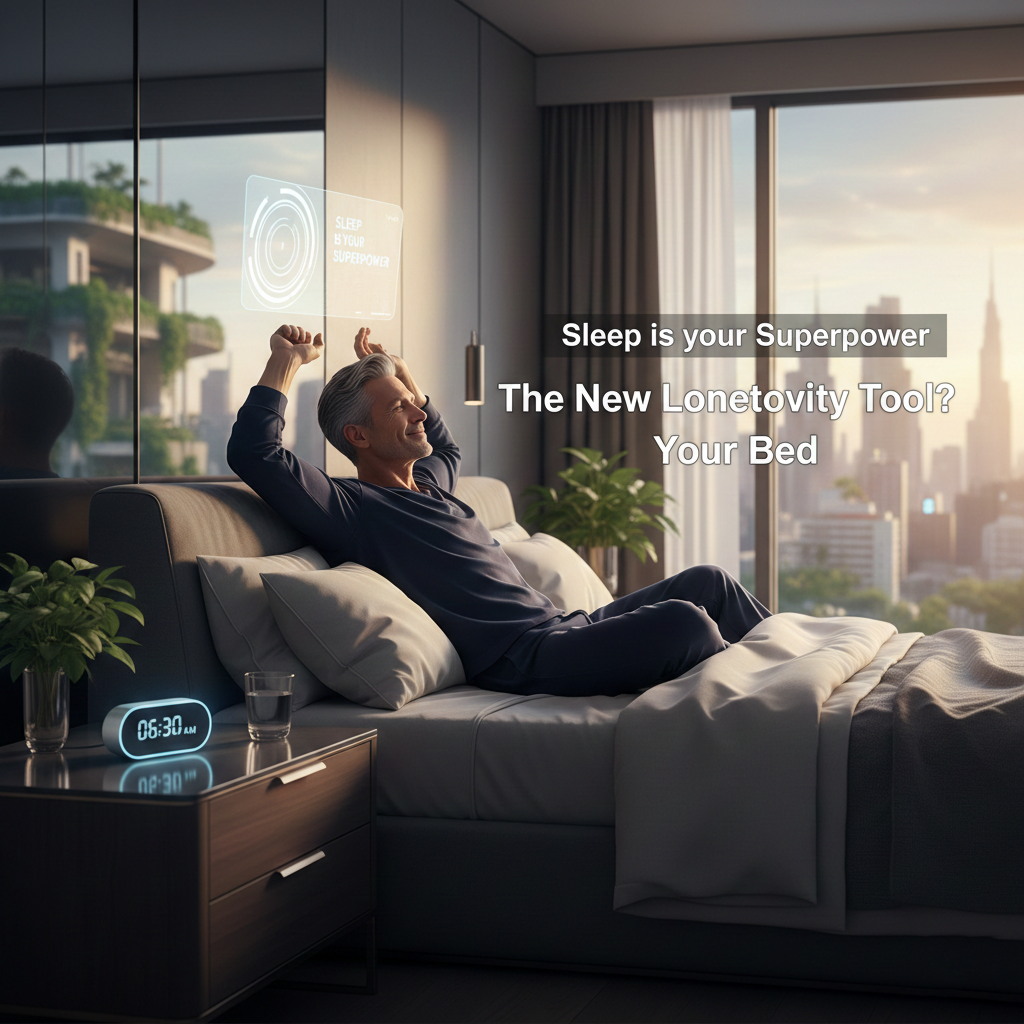
Sleep, by contrast, was treated as a soft habit — negotiable, flexible, something to catch up on later.
That assumption is now clearly broken.
Large population studies across the U.S., Europe, and Asia are converging on a consistent insight:
people who sleep around seven to eight hours per night live longer — measurably longer.
Both extremes carry risk. Chronic short sleep (under six hours) is associated with increased mortality, while consistently long sleep (over nine hours) often signals underlying metabolic, inflammatory, or neurological stress.
But duration is only part of the story.
What’s proving even more predictive than how long we sleep is how regularly we sleep.
Recent research shows that irregular sleep timing — going to bed and waking up at different times each day — may predict early mortality more strongly than sleep duration alone. In simple terms, the body doesn’t just need sleep.
It needs rhythm.
Why Consistency Matters Biologically
Sleep is not passive rest. It is an active biological process that underpins nearly every system involved in long-term health.
During deep sleep:
Cells repair DNA damage and restore metabolic balance
The immune system recalibrates inflammatory responses
Blood glucose, blood pressure, and heart rhythm are regulated
The brain clears toxic metabolic waste through the glymphatic system
When sleep is fragmented, irregular, or chronically insufficient, these processes are impaired. Over time, the result is accelerated biological ageing and increased vulnerability to chronic disease.
This reframes sleep entirely — from recovery behavior to preventive medicine.
Sleep as a Control Lever, Not a Tracker Metric
At Sugbee, we don’t view sleep as just another wearable statistic to monitor.
We see it as a foundational control lever for longevity, performance, and chronic disease prevention.
That’s why our approach focuses on:
Sleep duration and regularity
Circadian alignment, not just bedtime targets
The stress–sleep–metabolic feedback loop, rather than isolated signals
Personalized nudges instead of generic, one-size-fits-all advice
Chronic conditions like diabetes, cardiovascular disease, and burnout don’t develop overnight. They emerge gradually — often beginning with disrupted sleep patterns that go unnoticed for years.
Fix sleep early, and many downstream problems soften or never appear at all.
The Future of High Performance
In the next decade, the highest performers won’t be the ones who sleep the least.
They’ll be the ones who sleep better, earlier, and more consistently.
Sleep is no longer a wellness topic.
It’s a longevity asset.
And it deserves a seat at the same table as nutrition, exercise, and preventive care.