Beyond Step Counting: The 8 Activity Patterns Behind Sugbee Health Intelligence Engine
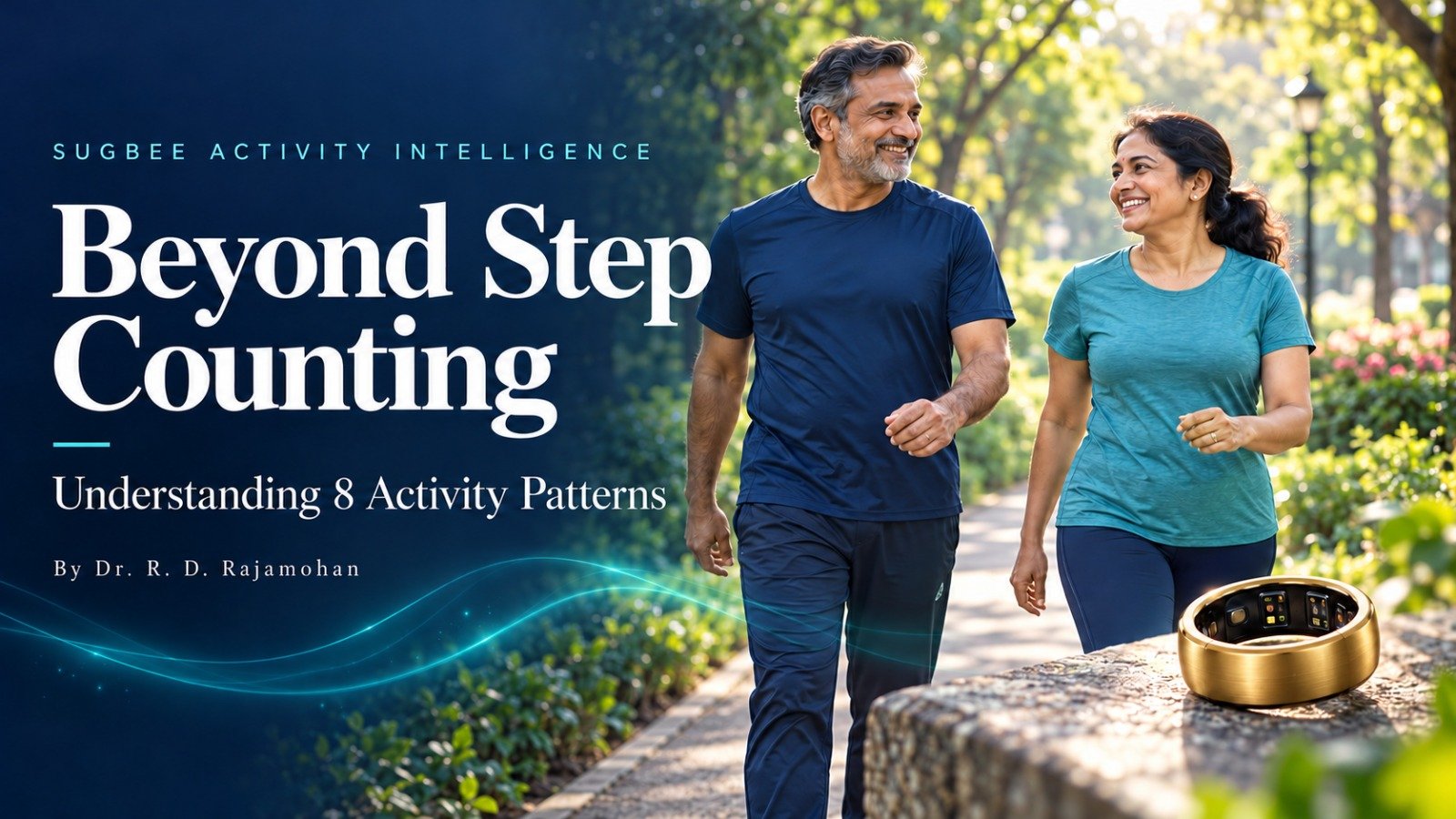
Your daily activity is more than the number of steps you walk. It’s about how consistently you move, when you move and how well you recover.
By Dr. R. D. Rajamohan
Consultant Diabetologist | Founder, Sugbee
Is counting steps enough to understand physical activity?
Imagine two people who both walk 8,000 steps every day.
One walks regularly throughout the day.
The other completes all 8,000 steps in the morning and spends the remaining hours sitting.
Although their step counts are identical, their daily movement patterns are different.
Your Sugbee Smart Ring collects supported movement and activity information.
Our proprietary Health Intelligence Engine (HIE) is designed to analyse activity patterns over time and help identify changes in daily movement behaviour.
The Sugbee HIE framework includes eight activity intelligence patterns.
Let’s understand what each one means.
- Sedentary Pattern — Am I Sitting Too Much?
What does it mean?
A sedentary pattern indicates insufficient movement or prolonged periods of low physical activity.
Why does it happen?
Desk jobs, prolonged driving, television viewing and limited opportunities for movement are common contributors.
How can you improve it?
Take regular walking breaks, use stairs when appropriate and gradually increase daily activity.
How Sugbee HIE helps: The framework examines active minutes across several days to identify recurring low-activity patterns.
- Overtraining Risk — Am I Exercising More Than My Body Can Recover From?
What does it mean?
Overtraining risk is the framework’s term for high activity followed by reduced recovery-related measurements.
It is not a diagnosis of overtraining syndrome.
Why does it happen?
Sudden increases in workout intensity, insufficient rest, inadequate nutrition and poor sleep may contribute.
How can you improve it?
Increase exercise gradually, maintain recovery days and avoid repeatedly exercising intensely while significantly fatigued.
How Sugbee HIE helps: It is designed to examine activity intensity alongside subsequent recovery-related physiological measurements.
- Inconsistent Routine — Why Does My Activity Change So Much?
What does it mean?
An inconsistent activity routine means your daily movement levels vary considerably.
For example, you may be highly active on some days and almost completely inactive on others.
Why does it happen?
Irregular working hours, travel, inconsistent exercise habits and lifestyle demands can contribute.
How can you improve it?
Develop a realistic movement routine that you can follow consistently.
How Sugbee HIE helps: The framework analyses variations in active minutes over time to recognise inconsistent activity patterns.
- Post-Meal Inactivity — Why Is Walking After Meals Important?
What does it mean?
Post-meal inactivity refers to remaining inactive after eating.
Why does it happen?
Desk-based work, watching television after meals and habitual sitting are common reasons.
How can you improve it?
Consider a comfortable walk after meals, when medically appropriate.
Even short periods of light activity can support post-meal glucose regulation.
How Sugbee HIE helps: When meal times are recorded, the framework can examine activity following meals and identify repeated inactivity.
This pattern requires meal information; the ring does not independently detect when you have eaten.
- Evening Overstimulation — Can Late Exercise Affect My Sleep?
What does it mean?
Evening overstimulation is the framework’s term for repeated vigorous physical activity late in the evening.
Why does it happen?
Late gym sessions, evening sports and demanding work schedules may contribute.
How can you improve it?
If intense evening workouts interfere with your sleep, consider finishing them earlier.
How Sugbee HIE helps: The framework examines the timing and intensity of activity and identifies recurring late-evening vigorous activity.
Evening exercise is not automatically harmful; its effect on sleep varies between individuals.
- Gait Instability Trend — Is My Movement Pattern Changing?
What does it mean?
Gait instability refers to changes in walking steadiness or consistency.
Why does it happen?
Fatigue, injury, balance problems and certain medical conditions may influence walking patterns.
How can you improve it?
Maintain appropriate strength and balance exercises. Seek medical evaluation for repeated falls, dizziness or noticeable changes in walking.
How Sugbee HIE helps: The development framework includes an experimental movement-stability pattern based on motion characteristics.
A finger-worn smart ring has limitations in assessing gait. This pattern requires appropriate sensor support and validation before being used for fall-risk assessment.
- Low Outdoor Exposure — Am I Spending Enough Time Outdoors?
What does it mean?
Low outdoor exposure refers to spending limited time outdoors during daylight hours.
Why does it happen?
Indoor employment, long screen-based working hours and limited outdoor activities can contribute.
How can you improve it?
Spend some time outdoors during daylight hours when practical, while following appropriate sun-safety precautions.
How Sugbee HIE helps: The optional framework pattern can examine outdoor exposure using compatible phone location or environmental information.
The current smart ring does not directly measure sunlight exposure.
- Micro-Movement Deficit — Am I Moving Enough Between Work Sessions?
What does it mean?
Micro-movements are brief periods of physical activity distributed throughout the day.
A micro-movement deficit refers to repeatedly having too few of these movement breaks.
Why does it happen?
Long meetings, desk work, prolonged driving and uninterrupted screen time are common contributors.
How can you improve it?
Stand up, stretch or walk briefly between extended periods of sitting.
How Sugbee HIE helps: The framework examines short movement bouts throughout the day to identify prolonged periods without regular activity breaks.
What Makes Sugbee Activity Intelligence Different?
Most activity trackers focus on steps, distance, calories and exercise duration.
Sugbee HIE is designed to examine eight distinct activity patterns, including movement consistency, inactivity, exercise timing and recovery.
It is not about making everyone walk 10,000 steps.
It is about helping each person understand their movement habits and develop a healthier routine.
Sugbee Smart Ring + Health Intelligence Engine: Beyond counting steps, towards understanding movement.
28 Lifestyle Patterns. One Health Intelligence Engine.
Your Sugbee Smart Ring collects supported physiological and lifestyle measurements.
Sugbee’s proprietary Health Intelligence Engine is designed to transform those measurements into meaningful insights by identifying patterns across three areas:
13 Sleep Patterns | 7 Stress Patterns | 8 Activity Patterns
The HIE framework incorporates personal baseline comparisons so that changes can be interpreted in the context of an individual’s usual patterns.
Our vision is to move beyond simply displaying health numbers and help people better understand their everyday lifestyle.
Sugbee — From Health Monitoring to Health Intelligence.
These insights are intended for lifestyle awareness and do not replace medical diagnosis or professional healthcare advice.